
What scorching looks like
Pick up a handful of roasted beans and look at the flat side. If you see dark burn marks, small blackened patches, or uneven discoloration on that flat surface, you are looking at scorching. It is one of the most common roast defects in commercial drum roasting, and it shows up in the cup as a bitter, ashy, sometimes smoky flavor that overpowers the coffee’s natural character. Even a small percentage of scorched beans in a batch can drag the entire cup quality down.
What causes scorching
Scorching happens when the flat side of a coffee bean presses against a surface that is too hot. In a drum roaster, the metal drum itself is the heat source. The beans tumble inside the rotating drum, and each time a bean’s flat side lands against the hot metal, it absorbs a burst of concentrated heat through direct contact. That is conduction, and it is the primary heat transfer method in traditional drum roasters.
Several factors make scorching more likely:
Charge temperature too high. If the drum is excessively hot when you drop the beans in, the initial contact creates immediate surface burns before the beans have time to absorb heat evenly.
Insufficient drum speed or agitation. Slower rotation means beans spend more time in contact with the hot drum surface. Each prolonged contact point is an opportunity for scorching.
Batch size too large for the drum. An overloaded drum restricts bean movement. Beans at the bottom of the pile get trapped against the drum wall, unable to tumble away.
Worn or uneven drum surface. Over time, drum surfaces develop hot spots from wear, scaling, or uneven seasoning. These localized high-temperature areas scorch beans on contact.
Scorching versus tipping
Scorching and tipping are related but distinct defects, and they are often confused. Scorching affects the flat surface of the bean, where it contacts the drum. Tipping affects the edges and tips of the bean, where the cell structure is thinnest and most vulnerable to heat damage. Tipping typically shows up as small blackened or charred spots on the pointed ends of the bean.
Both defects come from the same root cause: localized overheating through conduction. But they affect different parts of the bean and produce slightly different off-flavors. Scorching tends toward bitter and ashy notes. Tipping tends toward a sharp, burnt grain flavor. In practice, a drum roast with scorching issues usually has some tipping as well, since both result from the same conduction-heavy heat transfer.
How to reduce scorching in a drum roaster
If you are working with a drum roaster and dealing with scorching, there are several adjustments that can help:
Lower your charge temperature. Drop the beans into a cooler drum. This reduces the intensity of that initial contact. You may need to adjust your profile to compensate for the lower starting point, but the trade-off is worth it.
Increase drum speed. Faster rotation keeps beans moving and reduces the duration of contact with the hot surface. Not all drum roasters allow easy speed adjustment, but if yours does, it is one of the most effective fixes.
Reduce batch size. Pulling back to 70% or 75% of drum capacity gives beans more room to move freely. Less time pinned against the drum means less scorching.
Preheat properly. An uneven preheat creates hot spots on the drum surface. Make sure your preheat cycle is long enough and consistent enough to bring the entire drum to a uniform temperature before charging.
These adjustments help, but they are all workarounds. You are managing a limitation of the technology rather than solving the underlying problem. Reducing batch size to avoid scorching also reduces your throughput. Lowering charge temperature means longer roast times. Every mitigation comes with a trade-off.
The convection solution
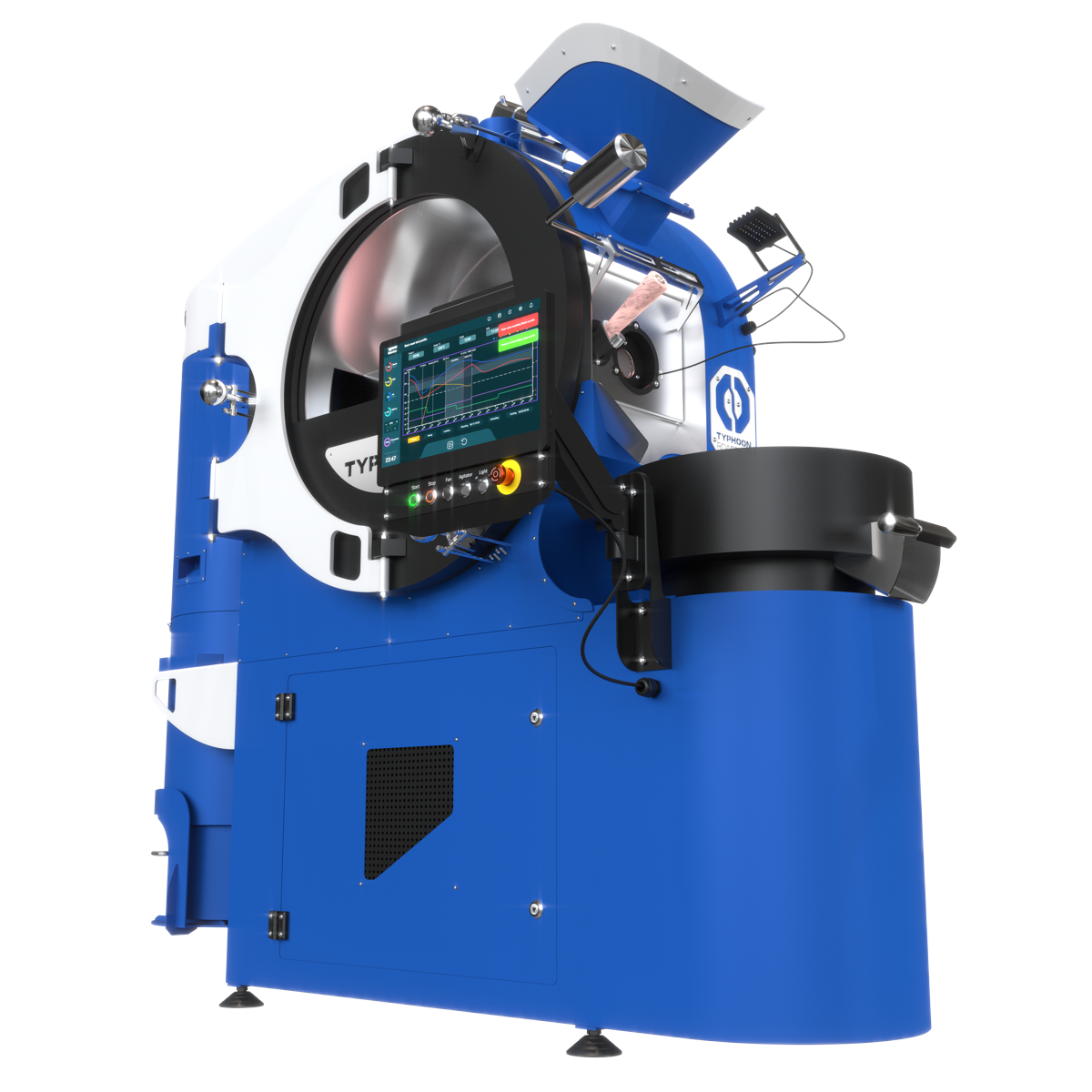
In a 100% convection roaster like the Typhoon, beans never touch a heated surface. The roasting chamber uses an active layer of hot air to suspend the beans in a fluid bed. Heat transfers through the air, not through metal contact. There is no drum. There is no conduction. The flat side of the bean never presses against anything hot.
This is not a minor improvement or a reduction in scorching risk. It is the complete elimination of the defect. Scorching becomes physically impossible because the mechanism that causes it does not exist in the system. The same applies to tipping. When heat reaches the bean uniformly through convection, there are no localized hot spots on edges or flat surfaces.
For roasters who have spent years managing scorching through careful profile adjustments, batch size restrictions, and drum maintenance, this is a genuine shift. An entire category of defect disappears from your quality control concerns. You can load the roaster to 100% capacity, run batch after batch without cooldown periods, and the beans come out clean every time.
See a scorching-free roast in person
Reading about it is one thing. Watching it happen is another. Get in touch with Alpha Coffee Equipment to schedule a visit to our demo facility. Bring your own green coffee and we will roast it on a Typhoon. You can see the beans, taste the cup, and decide for yourself whether eliminating scorching is worth the switch.