Walk into any specialty coffee shop and you will see bags labeled light, medium, and dark. But those three categories barely scratch the surface. Roast level affects every aspect of what ends up in your cup: acidity, body, sweetness, bitterness, and the balance between a bean’s origin character and the flavors created by the roasting process itself. Here is a closer look at what each level actually means.
How bean origin affects roasting
Before we get into roast levels, it helps to understand that not all green coffee starts from the same baseline. The origin, variety, and processing method of the beans influence how they respond to heat.
South American beans (Brazil, Colombia) tend to arrive as a lighter green color and are often less dense. They typically suit lighter to medium roast profiles and are forgiving to work with.
Indonesian beans (Sumatra, Java) are usually darker green and quite dense. They can handle higher temperatures and longer development times, which is why they are often used in darker roast profiles.
Ethiopian beans tend to be browner in their raw state and are also dense. They carry complex fruit and floral notes that many roasters want to preserve, so they are frequently roasted on the lighter side.
Understanding your green coffee is the first step toward hitting the right roast level consistently. A profile that works perfectly for a washed Colombian may overcook a natural Ethiopian.
Light roasts
Light roasts are pulled from the roaster during or just after first crack, the point where steam and CO2 pressure cause the beans to pop audibly. The beans come out a pale, “blond” color with no visible oil on the surface.
Flavor-wise, light roasts emphasize the bean’s origin character. Expect higher acidity, fruity or floral notes, and a lighter body. The grain-like, almost tea-like quality of a well-executed light roast is distinctive. These roasts preserve the most caffeine (the difference is small, but it exists) and tend to have the most complex flavor profiles.
| Roast name | Description |
|---|---|
| Cinnamon roast | The lightest drinkable roast. Pulled right at the start of first crack. Very high acidity, grain-forward flavor. Named for the light brown color, not the spice. |
| City / New England roast | Pulled at the end of first crack. This is the most common light roast level and the standard for professional cupping (quality evaluation). More developed sweetness than cinnamon roast, while still retaining high acidity and origin clarity. |
Medium roasts
Medium roasts sit in the window between first crack ending and second crack beginning. The most common designation here is Full City roast. The beans are a solid medium brown with minimal oil on the surface.
This is where many roasters find the sweet spot. Medium roasts balance the origin character of the bean with the flavors developed during roasting: caramel, chocolate, nuts. Acidity is still present but mellower than in light roasts, and the body starts to fill out. If you are tasting a new bean for the first time and aren’t sure where to take it, a medium roast is a solid starting point.
Full City roast is also the baseline for many espresso blends in the US specialty market. It provides enough body for milk drinks while still allowing origin flavors to come through.
Dark roasts
Dark roasts push into and beyond second crack. The sugars in the bean caramelize further and eventually start to carbonize. Oils migrate to the surface, giving the beans a shiny appearance. The origin character takes a back seat to roast-driven flavors: bittersweet chocolate, toasted grain, smoke, and sometimes a pleasant ashy quality.
| Roast name | Description |
|---|---|
| Vienna roast | Pulled in the middle of second crack. A moderate dark roast with noticeable oil and lower acidity. Common in traditional European espresso blends. Good body with bittersweet notes. |
| French roast | Pulled at the end of second crack. Dark brown, visibly oily. Most origin character is gone, replaced by smoky, bittersweet roast flavors. Heavy body, low acidity. |
| Italian / Spanish roast | Pushed past the completion of second crack. Nearly black, very oily. Dominant flavors are smoke and carbon. This is the darkest roast level before the beans begin to combust. Used in some traditional espresso preparations. |
A common misconception is that darker roasts are “stronger.” In terms of caffeine, the opposite is technically true (darker roasts lose slightly more caffeine during the longer roast). What dark roasts do have is a heavier body and more intense roast flavor, which many people perceive as strength.
Why convection roasting gives you better control over roast level
Hitting a target roast level consistently, batch after batch, depends on how precisely you can control heat application. This is where roaster design makes a real difference.
In a drum roaster, heat comes from two sources: the hot air passing through the drum, and the drum wall itself. That drum wall retains heat between batches and applies it unevenly through conduction. When you want to make a small adjustment to your roast profile, the thermal inertia of the drum can work against you. It is slow to respond.
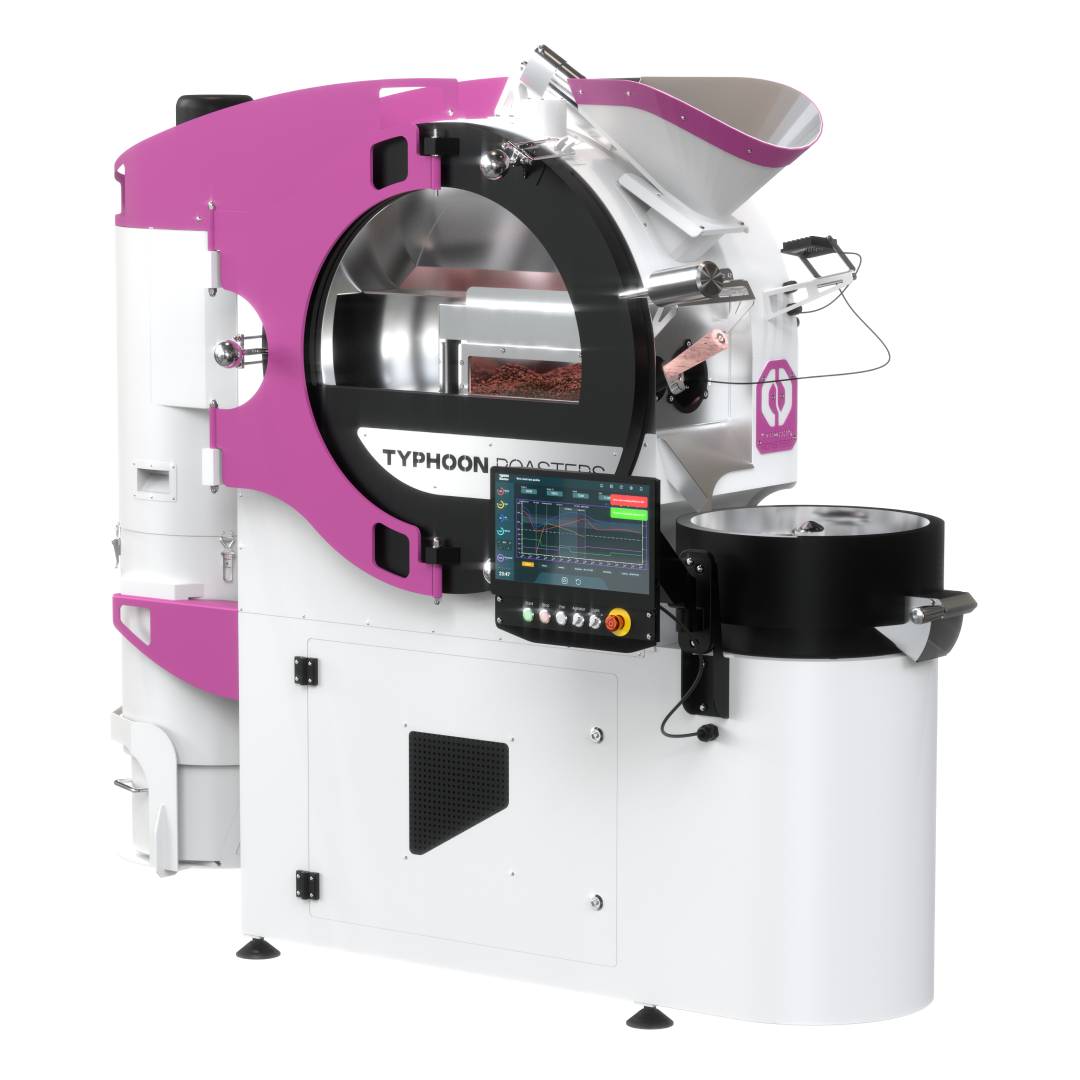
Convection-based systems like the Typhoon roasters we distribute remove the drum from the equation entirely. With 100% hot air heating, temperature changes take effect almost immediately. If you need to slow down development by 5 degrees at a specific point in the roast, the system responds in seconds rather than lagging. This level of precision is particularly valuable when you are trying to hit a light or medium-light roast, where the window between “underdeveloped” and “too far” can be very narrow.
The result is that you can reliably reproduce a specific roast level across hundreds of batches. Whether you are targeting a City roast for a single-origin pour-over or a Vienna roast for an espresso blend, the consistency is built into how the machine transfers heat.
Finding your ideal roast level
There is no universally “best” roast level. The right choice depends on the bean, the brewing method, and your customers’ preferences. What matters is that you can hit your target accurately and repeat it. If you want to discuss how a Typhoon convection roaster could help you dial in your profiles with more precision, reach out to our team.