If you have ever wondered what happens between a bag of pale green coffee beans and that aromatic cup in your hand, the answer starts with roasting. A coffee roaster is the machine that transforms raw green beans into the brown, fragrant, ready-to-brew product we all know. But there is more variety in how these machines work than most people realize.
What exactly is a coffee roaster?
A coffee roaster is a machine designed to apply controlled heat to green coffee beans over a set period of time. The heat triggers a series of chemical reactions that develop the flavors, aromas, and color we associate with roasted coffee. Roasters range from small countertop units that handle a few hundred grams to industrial systems that process hundreds of kilograms per hour.
At their core, all coffee roasters do the same thing: they move beans through rising temperatures in a controlled way, then cool them rapidly once the desired roast level is reached. The differences between roaster types come down to how they transfer heat and how they move the beans during the process.
How does coffee roasting work? The 5 key steps
Regardless of machine type, every roast follows the same basic sequence.
1. Loading the green beans
Green coffee is weighed and loaded into the roasting chamber. Batch size matters. Underloading or overloading the drum or chamber will produce uneven results, so most roasters have a recommended capacity range (typically 70-90% of maximum).
2. The drying phase (5-8 minutes)
Green beans contain around 10-12% moisture. The first stage of roasting drives off this water. Temperatures climb gradually, and the beans shift from green to a pale yellow. This phase typically takes 5 to 8 minutes and sets the foundation for everything that follows. Rushing it can lead to uneven development later in the roast.
3. Browning and the Maillard reaction
As temperatures rise past the drying phase, the Maillard reaction kicks in. This is the same chemical process that browns bread crust and seared meat. Sugars and amino acids in the bean react to create hundreds of aromatic compounds. The beans turn from yellow to light brown, and the first recognizable “coffee” aromas start to emerge.
4. First crack and development
At around 196°C (385°F), pressure from steam and CO2 inside the bean causes it to crack audibly. This is “first crack,” and it sounds a bit like popcorn popping. First crack marks the point where the coffee becomes drinkable. From here, the roaster decides how far to push the development. Stopping shortly after first crack gives a light roast. Continuing through to “second crack” (a quieter, more rapid crackling) produces darker profiles. The development time after first crack has a major influence on body, acidity, and sweetness.
5. Cooling
Once the target roast level is hit, the beans need to be cooled as fast as possible. This stops the roasting process and locks in the flavor profile. Most roasters use a cooling tray with powerful fans that pull ambient air through the beans. The goal is to bring them to room temperature within 4-5 minutes. Slow cooling means the beans keep developing from residual heat, which can push them past your intended roast level.
Types of coffee roasting machines
There are several approaches to roasting, each with different heat transfer methods and trade-offs.
Drum roasters are the most traditional type. Beans tumble inside a rotating metal drum that is heated from below, usually by gas burners. Heat transfer is a mix of conduction (contact with the hot drum surface) and convection (hot air moving through the drum). Drum roasters are forgiving and produce a classic roast profile, but cycle times tend to be longer (12-20 minutes per batch), and the conductive heat from the drum surface can cause scorching if not managed carefully.
Hot air (fluid bed) roasters use a stream of heated air to both roast and agitate the beans. The beans float on a column of hot air, which means heat transfer is almost entirely convective. This produces very even roasts and brighter flavor profiles. Cycle times are generally shorter than drum roasters.
Packed-bed roasters hold the beans in a stationary bed while hot air passes through them. These are less common but are used in some industrial settings.
Tangential and centrifugal roasters use mechanical force (spinning or angled chambers) to move beans while applying heat. These are typically found in large-scale commercial operations.
Hybrid roasters combine elements of different approaches. For example, a drum with improved airflow or a fluid bed with a rotating chamber.
How Typhoon roasters use 100% hot air convection
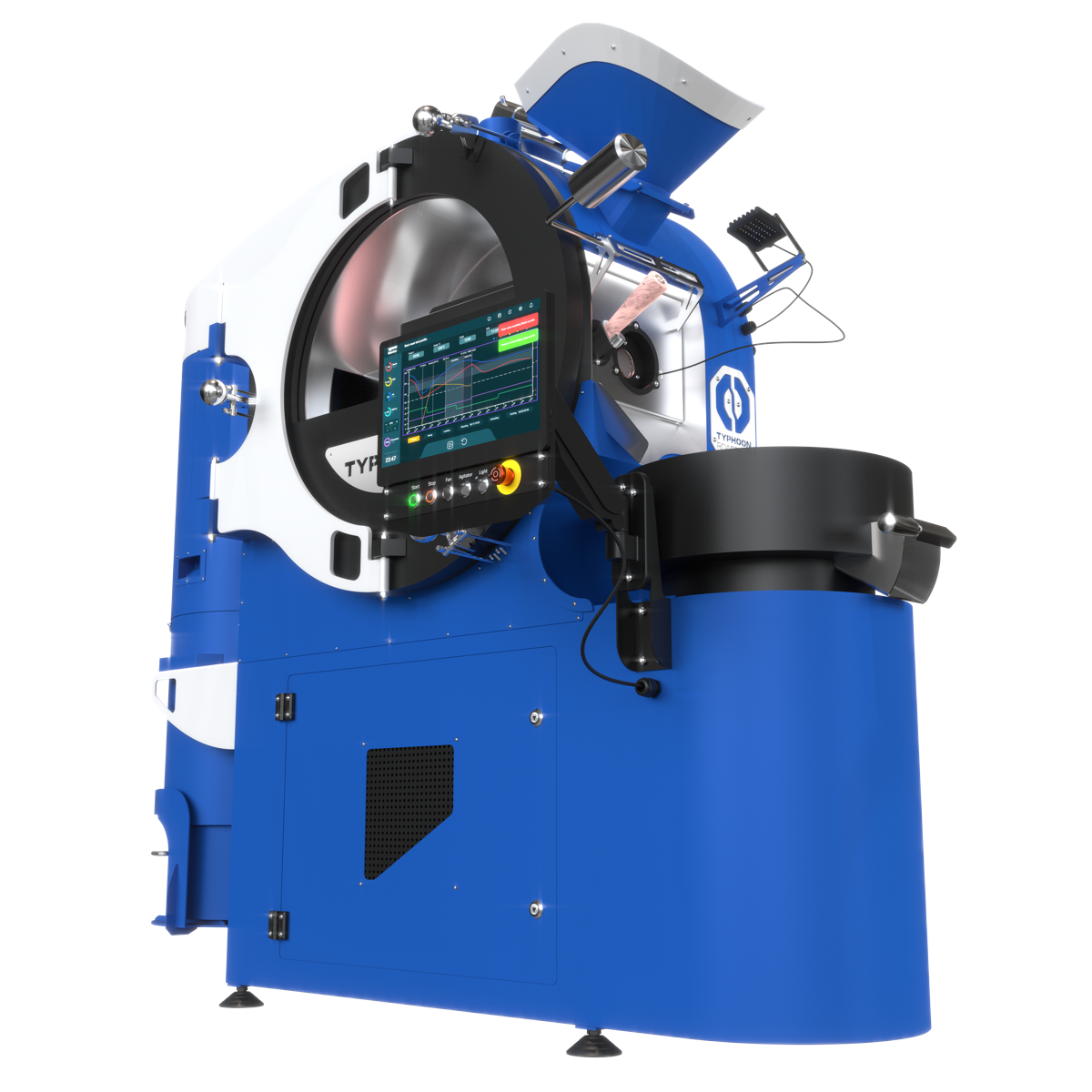
Typhoon roasters, which we distribute throughout the United States, take the fluid bed concept further with a pure convection approach. There is no drum and no conductive surface contact. Instead, beans are roasted entirely by precisely controlled streams of hot air.
This has a few practical benefits. First, there is no hot metal surface to scorch beans against, which means more consistent results batch after batch. Second, because hot air transfers heat more efficiently and uniformly than a metal drum, roast cycles are significantly shorter, typically 6-7 minutes compared to 12-20 minutes on a traditional drum. Third, the lack of contact-based heat transfer gives you cleaner separation between the bean’s natural flavors and the roast character, which is particularly valuable for specialty and single-origin coffees.
The rest period after roasting
Freshly roasted coffee is not at its best right out of the roaster. During roasting, large amounts of CO2 build up inside the beans. This gas needs time to escape, a process called degassing. Most roasters recommend waiting at least 24-48 hours before brewing, and many coffees hit their sweet spot 3-7 days after roasting. Espresso blends often benefit from even longer rest periods. During degassing, the beans are typically stored in bags with one-way valves that let CO2 out without letting oxygen in.
Ready to explore your options?
Whether you are starting a new roasting operation or upgrading from an older machine, the type of roaster you choose will shape every cup you produce. If you want to learn more about how convection roasting could fit your business, get in touch with our team. As the exclusive US distributor for Typhoon Roasters, we can walk you through the full lineup and help you find the right fit for your production needs.