
Roast defects quietly destroy coffee quality. They cover up what makes your beans special, create inconsistency between batches, and cost you customer trust over time. The good news: most defects are identifiable in the cup and fixable once you know what to look for.
This guide covers the five most common roast defects, how to taste them, what causes them, and how to fix them.
How to taste for roast defects
Before diagnosing, you need a reliable tasting method. Cup your roasts side by side: brew two batches of the same bean, but drop one batch 30-60 seconds earlier than your target. Compare them. The differences will make defects obvious that you might miss tasting a single cup in isolation.
1. Underdeveloped
How it tastes: Grassy, raw, sharp acidity, sour, grain-like. The cup feels thin and lacks sweetness.
What is happening: The beans did not spend enough time in the development phase. Maillard reactions and caramelization were cut short, leaving behind the raw, vegetal compounds that should have been transformed.
What you can try: Extend development time after first crack. Check that your rate of rise is not declining too rapidly before the beans are fully developed. Ensure your charge temperature is high enough for the batch size.
2. Baked
How it tastes: Flat, dull, papery, empty. The coffee has no life. It is not offensive, just boring.
What is happening: The rate of rise collapsed during roasting. Instead of moving through the stages with momentum, the beans stalled and “baked” at a relatively constant temperature. This happens when you reduce heat too aggressively mid-roast.
What you can try: Maintain a steady declining rate of rise through development. Do not cut gas/heat too drastically. The profile should show a smooth curve, not a plateau.
3. Overdeveloped
How it tastes: Bitter, smoky, charcoal-like, ashy. The origin character is completely buried under roast flavors.
What is happening: The beans spent too long in development or the end temperature was too high. Sugars have carbonized past the point of sweetness into bitterness.
What you can try: Drop earlier. Reduce end temperature by 3-5 degrees. Shorten development time. Check that your environment temperature reading is accurate.
4. Scorching
How it tastes: Burnt, ashy, with visible burn marks on the flat side of the beans.
What is happening: Beans are making direct contact with an overheated surface. The charge temperature was too high, or there is insufficient bean agitation in the roasting chamber.
What you can try: Lower charge temperature. Ensure your drum speed (for drum roasters) provides adequate tumbling. This is one area where convection roasters have a real advantage: since beans are suspended in air, surface scorching is physically impossible.
5. Tipping
How it tastes: Burnt, ashy, with visible burns specifically on the tips and edges of the beans.
What is happening: Aggressive heat application in the late stages of roasting is burning the thinnest parts of the bean (tips and edges) while the body remains less affected. This is caused by applying too much heat too late in the profile.
What you can try: Reduce heat application in the final stages. Let momentum carry the roast through development rather than pushing it with aggressive energy.
Quick defect reference
| Taste Profile | Likely Defect |
|---|---|
| Grassy, raw, sharp acidity | Underdeveloped |
| Flat, dull, cardboard | Baked |
| Dark, bitter, smoky | Overdeveloped |
| Bitter/ashy + surface burns | Scorching |
| Bitter/ashy + edge burns | Tipping |
A note on equipment and defects
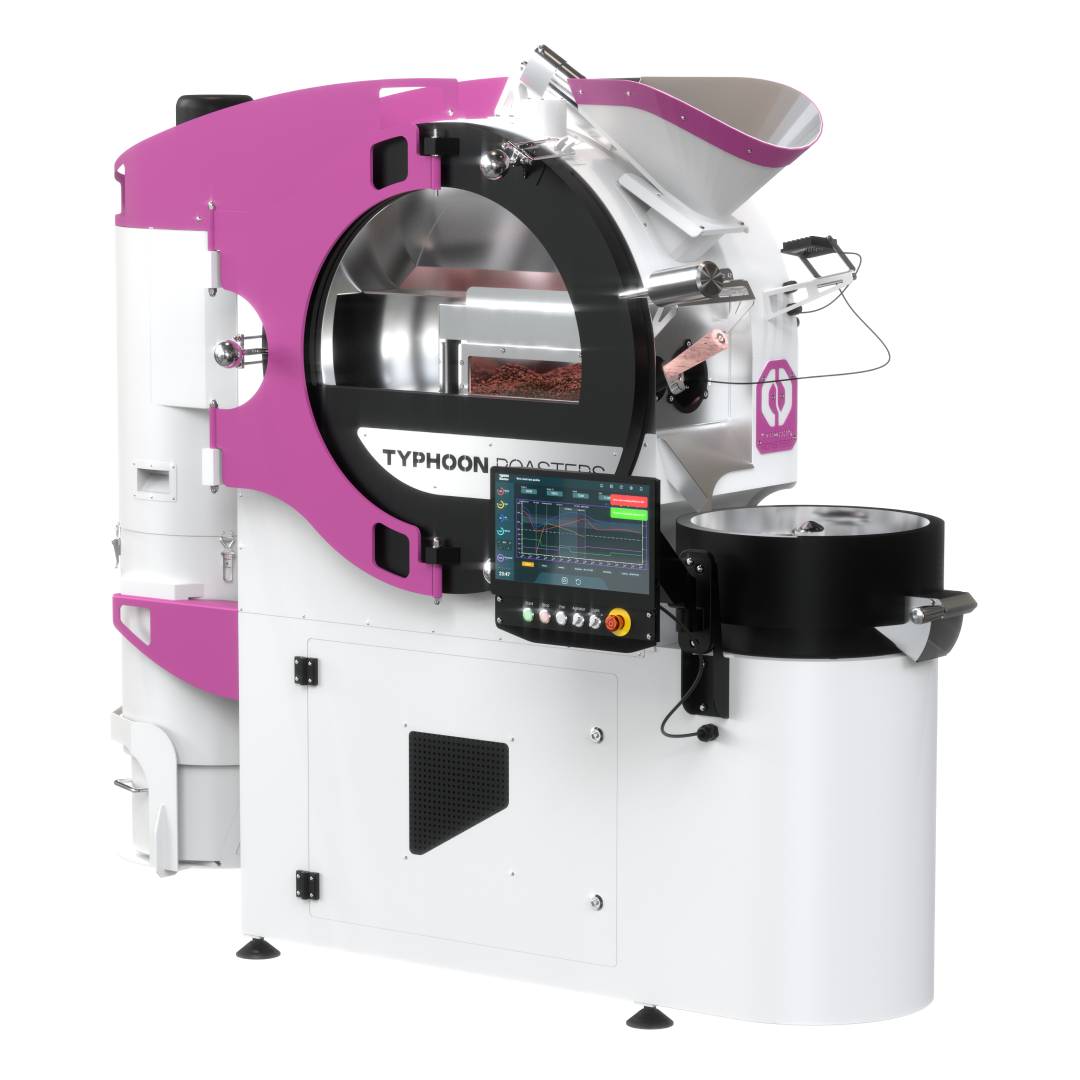
Two of these five defects (scorching and tipping) are directly related to heat transfer method. In drum roasters, where 60-70% of heat transfer is conduction, they are a constant risk. In 100% convection systems like Typhoon roasters, scorching is eliminated entirely because beans never contact a heated surface. Tipping risk is also much lower because heat is applied uniformly from all sides.
This does not mean convection roasters are foolproof: underdeveloped, baked, and overdeveloped roasts are still possible with poor profiling. But removing scorching and tipping from the equation makes consistent quality significantly easier to achieve.
Schedule a demo to see how Typhoon convection roasting delivers defect-free results.