Keep your Typhoon running at peak performance
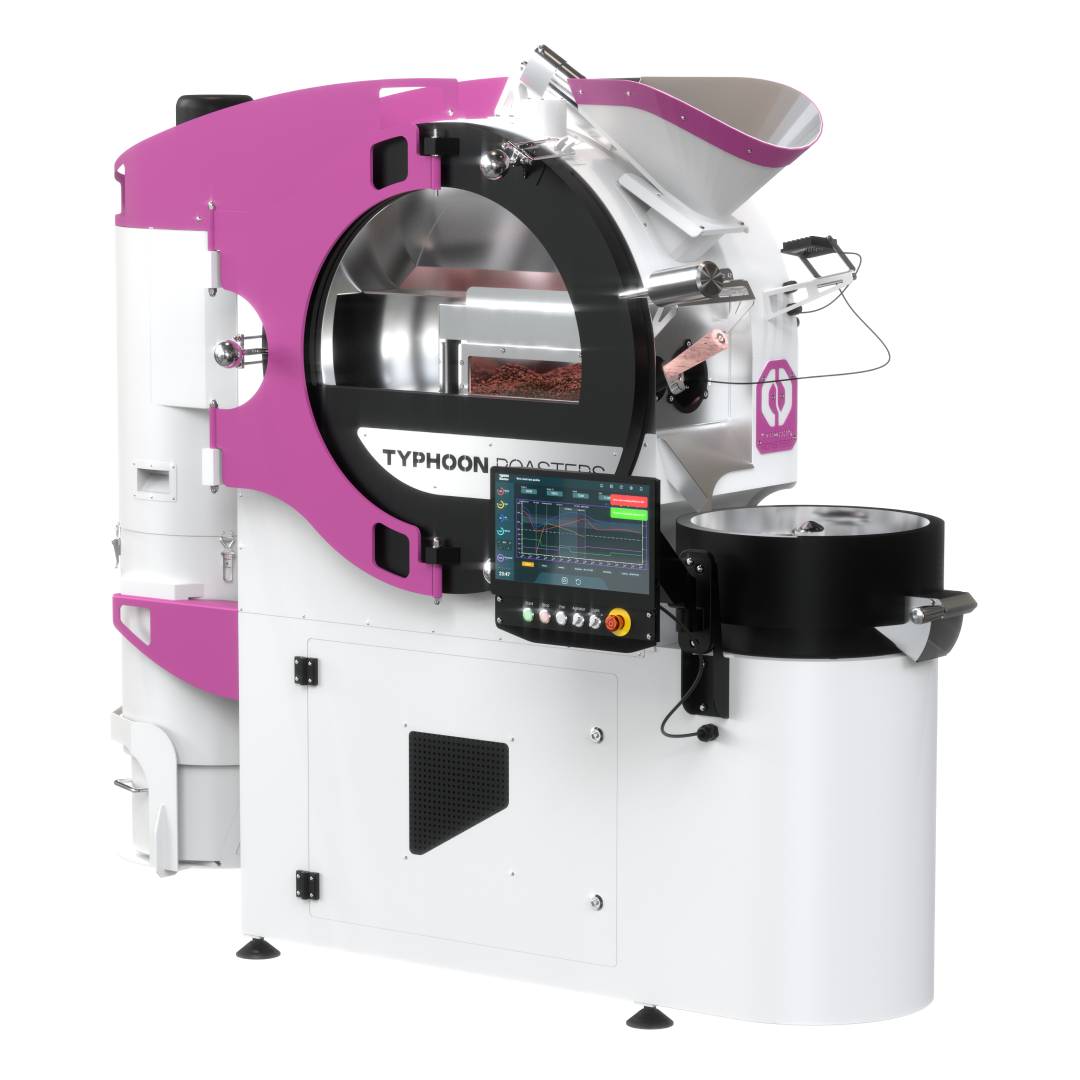
A well-maintained coffee roaster is a reliable coffee roaster. While the Typhoon line is engineered for durability and minimal upkeep, a consistent maintenance routine will keep your machine performing at its best, extend its lifespan, and ensure the safety of your team and facility.
This guide covers everything you need to know, from quick daily checks to quarterly professional servicing. Whether you have just taken delivery of your first Typhoon or have been roasting for years, this schedule will help you get the most from your equipment.
Daily Maintenance: 5-10 minutes
These quick tasks should be performed at the end of each roasting session. They take just a few minutes and prevent small issues from becoming big problems.
Run a complete cool-down cycle. Never power off the machine immediately after roasting. The cool-down cycle allows the system to purge residual heat evenly, preventing thermal stress on components. The Typhoon’s automated cool-down sequence handles this for you; just let it complete before shutting down.
Empty and check the chaff collector. Chaff buildup is the number one maintenance issue in any roastery. Empty the chaff collector after every session and inspect it for any blockages. A clogged chaff system restricts airflow, which affects roast consistency and poses a fire risk.
Wipe down the touchscreen and control panel. Coffee dust and oils accumulate on surfaces throughout the day. A quick wipe with a soft, dry cloth keeps the interface responsive and readable.
Visual inspection. Take 30 seconds to look over the machine. Check for any unusual residue, loose fittings, or signs of wear. Catching something early saves time and money later.
Weekly Maintenance: 30-45 minutes
Set aside time once a week for a more thorough cleaning. Many roasters schedule this for a Monday morning or Friday afternoon when production is lighter.
Clean the roasting chamber. Use a soft brush or compressed air to remove any coffee residue from the interior of the roasting chamber. The Typhoon’s stainless steel interior resists buildup better than cast iron drums, but regular cleaning prevents any oils from polymerizing and affecting flavor.
Inspect airflow paths. Convection roasting depends on clean, unobstructed airflow. Check the inlet vents, internal ducts, and outlet paths for any debris. Remove any obstructions with compressed air or a vacuum.
Examine the exhaust system. Check your afterburner (if equipped), ducting, and any external ventilation for chaff accumulation or blockages. Clean as needed. This is critical for both performance and safety.
Check seals and gaskets. Inspect door seals, hopper gaskets, and any other rubber or silicone components for wear, cracking, or deformation. Replace any that show signs of deterioration.
Monthly Maintenance: 1-2 hours
Monthly maintenance goes deeper and addresses components that do not need weekly attention but should not be neglected.
Deep clean the roasting chamber and cooling system. Remove any panels that are designed for user access and thoroughly clean all interior surfaces. Refer to your Typhoon’s manual for specific instructions on which panels can be safely removed.
Inspect electrical connections. With the machine powered off and unplugged, visually inspect accessible wiring connections, plugs, and terminals for any signs of heat damage, corrosion, or loosening. Do not disassemble sealed electrical compartments; leave those for professional service.
Lubricate moving parts. While the Typhoon has significantly fewer moving parts than a drum roaster, any bearings, hinges, or sliding mechanisms should be lubricated according to the manual’s specifications. Use only food-safe lubricants.
Calibrate temperature sensors. Accurate temperature reading is fundamental to consistent roasting. Use a reference thermometer to verify your Typhoon’s sensors are reading correctly. If you notice drift of more than 2-3 degrees, contact ACE support for recalibration guidance.
Review roast logs. Look at your recent roast data for any anomalies: unexpected temperature curves, longer-than-usual roast times, or inconsistencies between batches. These can be early indicators of a maintenance issue that is not yet visible.
Quarterly: professional service check
Every three months, we recommend a professional service inspection. This covers the systems that are beyond routine operator maintenance:
• Full electrical system inspection and thermal imaging
• Heating element performance testing
• Fan and motor diagnostics
• Software and firmware updates
• Full calibration of all sensors
• Safety system verification (spark protection, emergency shutoffs)
ACE offers scheduled service contracts that make this seamless. Our technicians know the Typhoon inside and out, and regular professional maintenance keeps your warranty intact.
Why Typhoon maintenance Is simpler
If you have maintained a drum roaster before, you will notice that the Typhoon maintenance routine is considerably lighter. There are a few reasons for this:
Stainless steel construction. Unlike cast iron drums that can rust, pit, and retain oils, the Typhoon’s stainless steel interior is naturally resistant to corrosion and easier to clean. It does not require seasoning or special treatments.
Fewer moving parts. No rotating drum means no drum bearings, drive belts, gearboxes, or chain drives to inspect, tension, and replace. This eliminates an entire category of mechanical maintenance.
Integrated spark protection. The Typhoon’s built-in spark detection and suppression system reduces fire risk and eliminates the need for separate aftermarket spark protection equipment that requires its own maintenance schedule.
ACE service and support
Every Typhoon comes with a 2-year full warranty covering parts and labor. Beyond the warranty, ACE provides ongoing support to keep your operation running smoothly:
• Remote diagnostics: Our team can connect to your Typhoon remotely to troubleshoot issues, review performance data, and guide you through adjustments without waiting for a site visit.
• On-site technicians: When hands-on service is needed, our qualified technicians are available for on-site visits across our service regions.
• Spare parts: We maintain stock of all common spare parts for fast turnaround, minimizing your downtime.
• Training: We offer operator training to ensure your team knows how to get the best from your Typhoon and perform routine maintenance correctly.
Contact our service team to set up a maintenance contract, schedule a service visit, or ask any questions about caring for your Typhoon.